The car is already past a jump. You’re sitting on Farnsworth, in a lot off Galena Boulevard, or on the shoulder of I-88 through Aurora, and you need the vehicle moved. A call for towing in Aurora IL goes right when you name the street, the fault in one sentence, the size of the car, and a shop or driveway in Kane or DuPage before an operator is assigned.
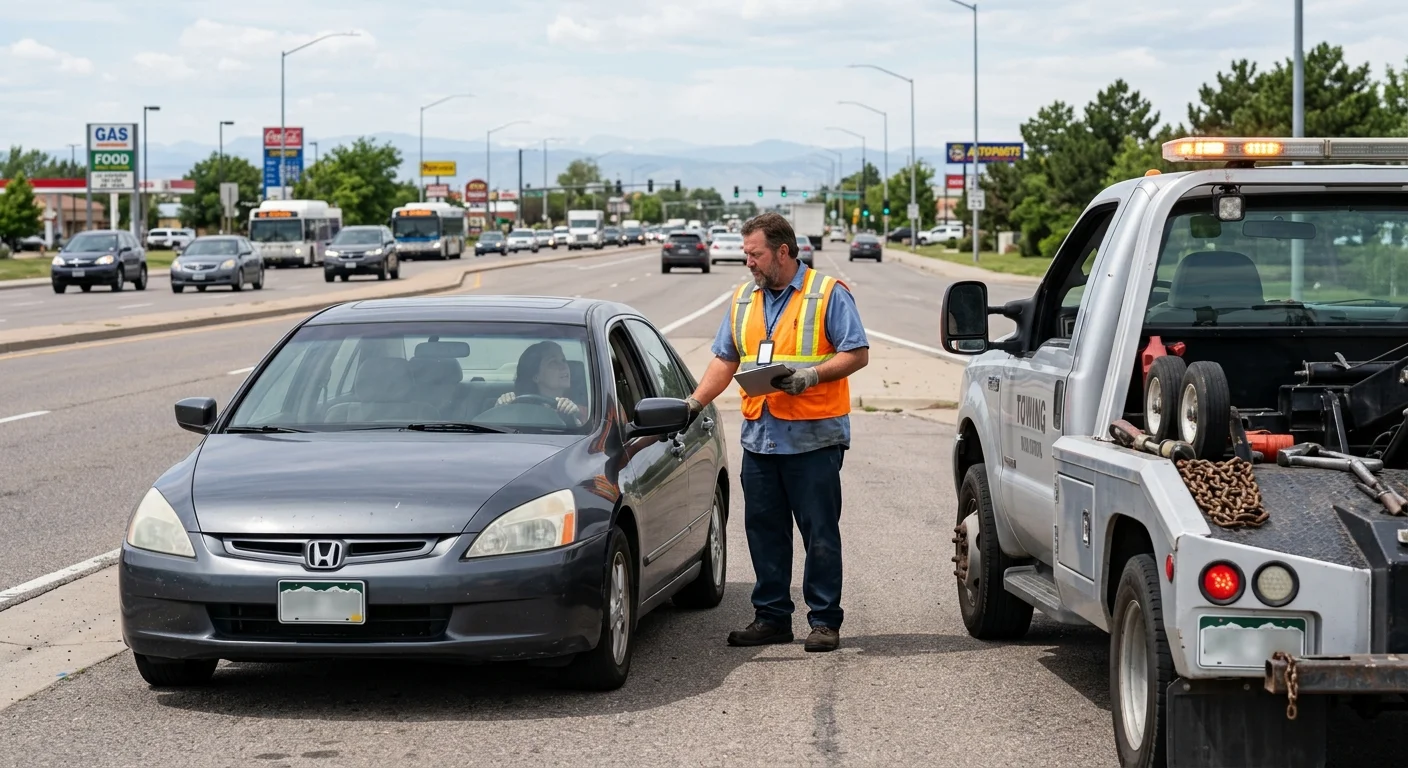
Pin down your Aurora street, lot, or highway location
Aurora is not one pin. The Fox River splits downtown. Kane County covers most of the city. DuPage takes the east side toward Naperville. A dispatcher who only hears “I’m in Aurora” still has to guess the bank of the river, the arterial, and the parking field.
Give a street and a cross street. Galena Boulevard, New York Street, Indian Trail, Illinois Route 31, Broadway, and Farnsworth Avenue are names operators actually use. On IL-59, say which entrance or which light. In a garage, add the level, the paint color of the zone, and whether a flatbed can clear the ramp. Surface lots along Route 59 look the same at night. The aisle number and the store you face matter more than the city name.
On I-88, the Ronald Reagan Memorial Tollway, add the direction and the nearest exit. Eastbound toward Downers Grove is a different send than westbound toward Sugar Grove. Stay in the vehicle with the hazards on unless you are sitting in a live lane. Do not walk the wall in the dark. If Aurora Police or Illinois State Police are already on scene, say that. A police-directed hook is a different job than the private call you placed.
If the car is already gone, stop hunting for an aurora tow truck on the next block. Aurora is a suburb. It is not the City of Chicago pound system. A municipal impound here uses that city’s own lot and its own administrative fee, with process under 625 ILCS 5/11-208.7. Notice is due within 10 days. A hearing must be convened no later than 45 days after the notice is mailed. The statute sets no dollar cap. Confirm the current fee with the lot that has the car before you pay. A private-property relocation in Kane or DuPage is a third track. Those moves are done by commercial vehicle relocators licensed by the Illinois Commerce Commission, under 625 ILCS 5/18a, not on Chicago’s $250 and $350 pound schedule under Municipal Code 9-92-080.
If you think the car was taken inside Chicago, use the city’s Find Your Towed Vehicle tool and the Common Towing Questions page. If you are still with the car in Aurora, you need a pickup, not a pound lookup.
Say what happened to the car in one sentence
Dispatch does not need the whole morning. One clean sentence is enough: it will not start, the transmission will not go into gear, the axle locked after a curb, or it took a hit on New York Street and you cannot drive it. That sentence tells an operator whether this is a simple hook, a winch, or a recovery that needs more than a light-duty truck.
Keep roadside work in its own bucket. A dead battery or a spare in the trunk is often still a roadside assistance call. We already wrote the Aurora version of that fork, dead battery or flat tire in Aurora. This page starts after that fork. The car has to leave the street, the lot, or the shoulder.
If you crashed, say so. Kane County logged 10,445 crashes in 2024, with 29 of them fatal, in IDOT’s crash tables. An accident scene on IL-59 or I-88 is not a parking-lot stall. Mention airbags, leaking fluid, and whether the wheels still sit square. Do not crawl under the car. Do not try to roll a vehicle with a broken steering rack just to make the tow easier.
If a parking gate closed on the bumper, or the car is high-centered on a landscaped island by a Route 59 entrance, say that in the first sentence. A winch-out is a different setup than a roll-on. If the keys are missing, say that too. Operators can still move many cars without keys. They need to know before they pick a truck.
Leave out the dealership appointment and the story of the morning. Get people out of the travel lane. Then give the line the fault, not the day.
Report size, drivetrain, and whether it rolls
The next three facts decide the truck. Size. Drivetrain. Whether it rolls and steers.
A compact sedan on a quiet East Aurora street is a light-duty job. A three-quarter-ton pickup, a cargo van, or a small box truck is not. If you drive an EV, say the make. Many of those have to ride on a flatbed in transport mode. All-wheel drive and some crossovers do not love a two-wheel hook. Tell the line AWD, 4x4, or two-wheel drive in plain words. The operator we match then picks a wheel-lift or a flatbed. You confirm that choice when you hear the quote, before anyone is assigned.
Say whether the car rolls. Neutral, parking brake off, tires inflated, no curb locked against a wheel. If it is in a stall with cars on both sides, say the gap. A tight garage off Broadway is a different problem than an open shoulder on Indian Trail. Low body kits, aftermarket splitters, and running boards snag on a bed if nobody mentions them.
Motorcycles, trailers, and dually trucks need different equipment. If you are not sure what you have, read the door sticker for GVWR and say the number. Do not guess a class. Do not ask us to guess it either. Quick Tow Chicago does not own the trucks. The independent operator who takes the job owns the equipment. Your job on the call is to describe the vehicle so that operator shows up with the right one.
If the car is already on jack stands, or a wheel is gone, say that. A missing wheel changes the loading. So does a seized parking brake, a locked steering column, and a transfer case stuck in four-low. None of that is a reason to be embarrassed. It is the difference between a clean load and a second truck.
Winter does not change those three facts. It does make the shoulder less forgiving. The Chicago metro’s O’Hare climate normals for 1991 through 2020 show 38.4 inches of snow a year and 121.3 nights at or below freezing. I-88 through Aurora takes that weather. A stall in January is still a pin, a fault, a vehicle, and a destination. Say if the car is in a drift or on ice so the operator brings a winch instead of assuming a roll-on.
Choose a shop or home destination in Kane or DuPage
Aurora towing is a two-point job. Pickup is half. Drop-off is the other half. Name the destination before the operator is assigned. A driveway in west Aurora, a dealer on IL-59, an independent shop near downtown, or a lot in Naperville are four different mileages. The quote you hear is for that pair of points, not for somewhere in the Fox Valley.
Stay inside Kane or DuPage if you can. That is the map this call is built on. North Aurora, Batavia, Montgomery, and Naperville are the usual short hops. If the car has to go into Cook County or across the metro, say the full address. A longer haul is still a dispatch. Confirm the miles and the truck type on the quote. The number you hear on the phone is the number that should land on the invoice.
If you do not have a shop yet, pick a safe hold: your driveway, a friend’s, or the lot the shop named in a voicemail. Do not send the truck to the dealer on 59 without a name. There is more than one. Give the street address. If the shop closes before the car can arrive, say so. The operator needs a place that will take the vehicle tonight, not a hope.
Insurance may want a specific yard. We do not bill every carrier and we do not run a storage lot. If your adjuster named a destination, use that address. If they did not, you choose. Get the quote for that destination, then let the operator roll.
People and pets do not automatically ride with the car. A statewide rule on staying in the disabled vehicle, or riding in the cab of an aurora tow truck, was not in the sources this site is allowed to cite. Ask the operator when you hear the quote. Many will want you out of the vehicle for the hook. Plan a separate ride. A friend or a rideshare is a different trip. Do not stand in I-88 traffic to film the load.
A tow truck near me in Chicago search will show you how wide this metro is. Aurora sits on the far-west end of it. The same four facts still apply: pin, fault, vehicle, destination.
What a referral line can and cannot promise
Quick Tow Chicago is a referral service. We take the call on the line and match you with an independent local operator. We do not own wreckers. We do not employ drivers. We do not run a yard in Aurora or anywhere else. We hold no Illinois towing licence. The operators in our network do the work. On this site that reads as: we line up an operator, we dispatch an operator, the operators we send.
That split matters for towing Aurora IL because Illinois treats private-property relocation as a licensed trade. Under 625 ILCS 5/18a-300, commercial vehicle relocators in Kane, DuPage, Cook, Will, and Winnebago counties work under the Illinois Commerce Commission. We are not one of those relocators. If a property manager needs a car pulled from a reserved stall, that is an ICC-licensed relocator job, not a claim this brand can make. Disabled cars on public streets, and police-directed tows, sit outside that relocator statute. For the broader map of who watches which kind of tow, we keep a separate explainer on who regulates towing companies in Illinois.
We also do not set a price. No operator in this metro has a rate card on this site. The price is quoted before the truck rolls. You hear it. You accept it. Then an operator is assigned. We will not invent a flat rate, a cap, or a normal Aurora number. The ICC’s maximum relocation rate is not published on the Commission pages we use, so we do not print one. Aurora’s municipal impound fee is the city’s own figure. We have not confirmed it here. Ask the lot.
Chicago pound math does not travel west on I-88. The city’s published tow fee under 9-92-080 is $250 for a vehicle under 8,000 pounds and $350 at or above, with storage of $50 or $100 a day. That schedule is Chicago’s. It is not ours, and it is not Aurora’s.
We do not promise an arrival clock. We have no fleet to measure one with. The line takes calls 24 hours a day. A notice plays, then the call is recorded. Illinois is treated as an all-party consent state on this line, so that notice is not optional. There is no live dispatcher on the other end of a single ring. An independent local operator gets the job after you leave the pin, the fault, the vehicle, and the destination.
Confirm three things before anyone is assigned: the truck type, the drop-off address, and the operator’s quote. If those three match what you asked for, you are ready.
When to call us
Call when the car has to leave an Aurora street, lot, or I-88 shoulder, and a jump or a spare will not finish it. That is an emergency towing job. The line takes calls 24 hours a day, plays a recording notice, and we match you with an independent local operator. Call us at (773) 830-6930.