Can a tow truck refuse to take my car in Chicago?
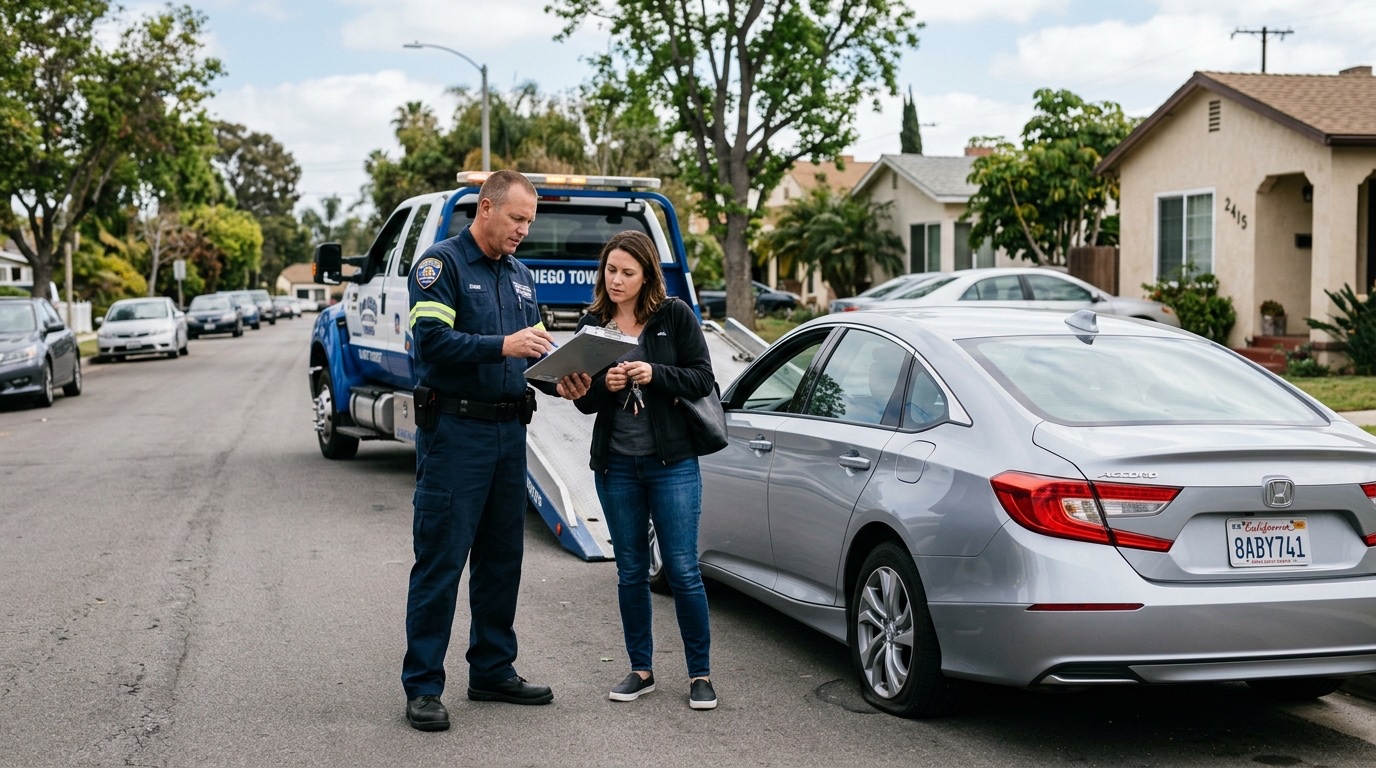
Yes, but only in specific situations, and which rules apply depends entirely on who ordered the tow. Here is when an operator can refuse, and what you are owed either way.
What you'll learn
- The legitimate reasons a Chicago-area tow operator can refuse a job
- The difference between a tow you order and one the city, a village or a property owner orders, and why your choice of company only applies to one of them
- What 625 ILCS 5/18a requires of a private-property relocator, and what it forbids
- Your rights as the vehicle owner if you are refused
- What changes when the breakdown happens in a suburb rather than inside the city
Step by step
- Reason 1 - Vehicle weight or size exceeds the truck's rated capacity, for example a standard wheel-lift truck sent to a loaded box truck or bus that needs a heavy-duty rig.
- Reason 2 - Vehicle is unsafe to tow: a hazardous fluid leak, a fire risk, or structural collapse.
- Reason 3 - The operator cannot verify ownership, with no registration and no clear vehicle-to-driver match.
- Reason 4 - The location is unsafe for the operator: an active hostile environment, no safe pull-off, a live work zone, or an expressway spot with no usable shoulder.
- Reason 5 - The operator does not service that area or that vehicle type, for example an electric vehicle call to an operator with no flatbed.
- When an operator is expected to take it: a tow you requested and chose the company for, and an insurance or motor-club dispatch on the operator they sent.
If an operator refuses and you are stranded somewhere unsafe, call 911. IDOT runs an Emergency Traffic Patrol on the Chicago-area expressways, the crews known as the Minutemen, and because they patrol constantly they are often first to reach a disabled vehicle. What they do is set up a safe lane closure, warn approaching traffic and restore normal flow. They do not repair your car and they do not tow it away.
Yes, but only for real reasons
A Chicago-area tow operator can refuse to take your vehicle, but only in specific situations, not because they do not feel like making the trip and not because a better-paying job is waiting. The line that matters most here is not which company shows up. It is who ordered the tow, because that single fact decides whether you have any say at all.
The legitimate reasons an operator can refuse
- The vehicle exceeds the truck's safe rating. A standard wheel-lift rig cannot safely tow a loaded box truck, a bus or a heavy commercial vehicle. This metro produces a lot of those: the intermodal complex south of Joliet is the largest inland port in North America, and the Elk Grove Village industrial park sits against O'Hare.
- The vehicle is unsafe to tow. A fuel or fluid leak, a fire risk, or a body that has lost structural integrity after a crash all change the job from a tow into a recovery, and sometimes into a job for the fire department first.
- Ownership cannot be verified. If you cannot produce a driver's licence, a registration or other proof that you have authority to move the vehicle, the operator can refuse. That is not obstruction, it is what stops a tow truck from becoming a theft tool.
- The location is unsafe for the operator. The Chicago expressway system carries some of the heaviest urban traffic in the country, and in places there is no usable shoulder at all. An operator who says they will not work a live lane is right.
- The operator does not serve that vehicle type or that area. An operator without a flatbed may legitimately refuse an all-wheel drive or electric vehicle, because the alternative is damaging your drivetrain.
Who ordered the tow changes everything
A tow you order
You pick the company, you agree the price before the truck rolls, and the operator either takes the job or tells you why not. This is the only category where your choice of company means anything.
A city or village tow
If Chicago Police or a suburban department order the tow, you do not choose the company and you do not choose the destination. Inside the city the vehicle goes to one of four City of Chicago auto pounds, all open 24 hours a day, 365 days a year: Central at 500 E Wacker Dr on the lower level, the O'Hare pound on Bessie Coleman Drive, Pound 2 at 103rd and Doty Avenue, and Pound 6 at 701 N Sacramento Avenue. Fees are published under Municipal Code 9-92-080: $250 to tow a vehicle under 8,000 pounds, $350 at 8,000 pounds or more, and $50 or $100 per day storage on the same split. In a suburb the vehicle goes to that village's own impound with its own administrative fee, which is not the Chicago schedule.
A private-property relocation
In Cook, DuPage, Kane, Will and Winnebago counties, a tow from private property is a relocation under the Illinois Commercial Relocation of Trespassing Vehicles Law, 625 ILCS 5/18a, performed only by a commercial vehicle relocator licensed by the Illinois Commerce Commission. You did not order it, you cannot choose the company, and the property owner did. What you do get is a specific set of rights, and they are worth knowing.
What the law requires of a relocator
- A compliant sign, or the tow is unlawful. Under 18a-302 the sign must be posted conspicuously in the affected area, be at least 24 inches high by 36 inches wide, sit at least 4 feet from the ground but less than 8, be illuminated or painted with reflective paint or both, and carry the relocator's name, address and telephone number plus the amount of the towing charges. Removing a vehicle from a property that lacks those signs is unlawful under 18a-300(10).
- They must stop if you arrive in time. Under 18a-300(9) a relocator may not remove a vehicle when the owner or operator is present before the removal is complete and is willing and able to move it immediately.
- A hard distance cap. No more than 15 air miles from an unincorporated location, and no more than 10 air miles from anywhere else, under 18a-300(14).
- Police notified within the hour. Under 18a-300(11) the relocator must notify law enforcement in the jurisdiction where the vehicle was removed within one hour of the removal.
- Rates set by the Commission. Charging anything other than in accordance with the rates the Commission sets is unlawful under 18a-300(12), and any amount charged above the reasonable rate the Commission establishes must be refunded under 18a-300(18).
- The one-hour phone rule. Under 18a-300(15), if after a reasonable effort the owner cannot make telephone contact with the relocator for a period of one hour from the first attempt during any time the relocator must answer that number, all fees for towing, storage, or otherwise are to be waived. Log your call times.
What the Commission's own consumer guide adds
- No storage fee at all if the vehicle is claimed within 24 hours with proper identification and payment.
- No storage charges for days the towing company is closed to the public.
- Relocators must accept cash, money orders, cashier's or certified checks and major credit cards without additional fees.
- You must receive a complete Relocation Towing Invoice as a receipt, with complaint instructions on it.
- Relocation towing companies, tow truck operators and dispatchers are licensed by the Commission for two-year periods, and criminal and driving records are reviewed before a licence is issued or renewed.
Suburbs are not the city
Every suburb runs its own impound and sets its own administrative fee. State law, 625 ILCS 5/11-208.7, requires that fee to be reasonable and related to the municipality's administrative and processing costs, and sets no dollar cap, which is exactly why the figures vary so widely. It does guarantee procedure: notice within 10 days, an initial hearing scheduled and convened no later than 45 days after the date that notice was mailed, and a refund of administrative fees if the hearing officer finds the vehicle was stolen or hijacked at the time it was impounded.
What to do if you are refused
- Ask why, and write it down. A legitimate refusal has a specific reason attached to it, and an operator who cannot give one is telling you something.
- If you are somewhere unsafe, call 911. IDOT's Emergency Traffic Patrol works the expressways to clear hazards and protect responders, but it is a patrol rather than a call-out service and it does not tow your vehicle away.
- Call a company that runs the right equipment. A refusal on capacity or vehicle type is a routing problem, not a dead end. Leave exactly what the vehicle is and where it sits.
- For a relocation you believe was unlawful, complain to the regulator. Illinois Commerce Commission, 9511 W. Harrison Street, Des Plaines, Illinois 60016, phone (847) 294-4326, using the form on the back of your invoice.
Patterns we see across this metro
- No-shoulder refusals. A driver stopped on the Kennedy or the Dan Ryan where there is nowhere to set up gets told to wait. That is usually the right call, and the fix is a scene set up properly rather than a faster truck.
- Out-of-town and rental refusals. A traveller in a rental near O'Hare, a student car registered in another state, or a driver on I-80 hundreds of miles from home all run into ownership-verification problems more often than locals do.
- Heavy-duty cascades on the freight corridors. A truck fails on I-80 or I-55, a light-duty rig arrives, and nothing can happen until a properly rated wrecker is dispatched. Confirming weight and load on the first call prevents the whole sequence.
- Winter surges. O'Hare averages 38.4 inches of snow a year and 121.3 nights at or below freezing, and the city bans arterial parking outright from December 1 to April 1. On the worst nights every operator in the metro is committed and the honest answer is a longer wait, not a refusal.
Numbers worth keeping
- 311 - the City of Chicago line for locating a towed or relocated vehicle, and for reporting an abandoned one.
- Bureau of Traffic Services - 312.746.4954, Monday to Friday 7am to 3pm, for questions about a city tow, and the Auto Pound Office for a 15-day extension.
- Blocked driveway - 312-746-4520, the city's own line for a vehicle blocking your driveway.
- Illinois Commerce Commission - (847) 294-4326, for a private-property relocation complaint.
Rather have a pro handle it?
Towing and roadside service across the Chicago metro. One local line, taking calls 24/7.
Keep learning.
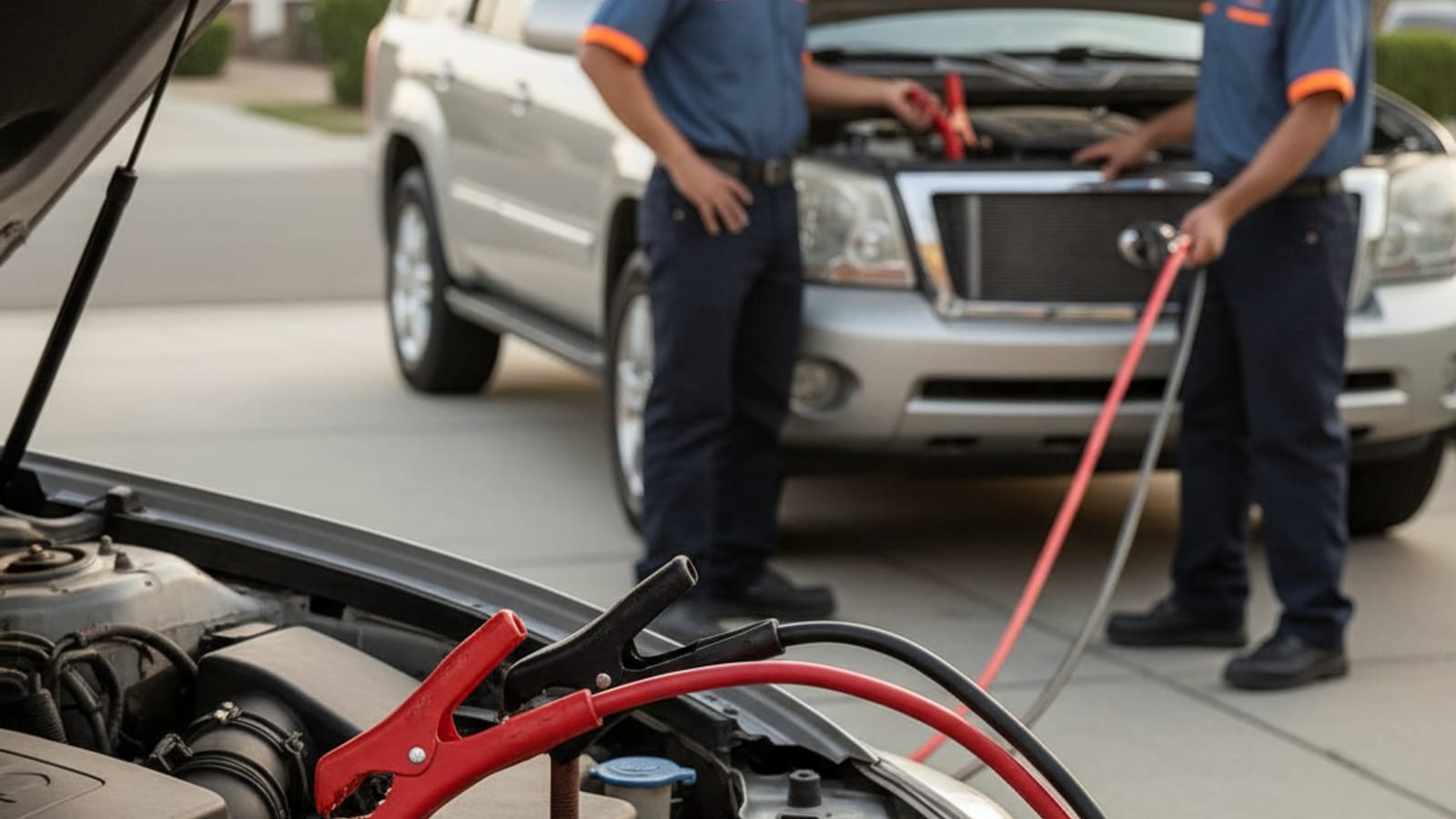
Jump-start a dead battery safely
Jumper cables are simple until you hook them wrong. Do it right and you'll avoid sparks, ruined electronics, and a tow you didn't need.
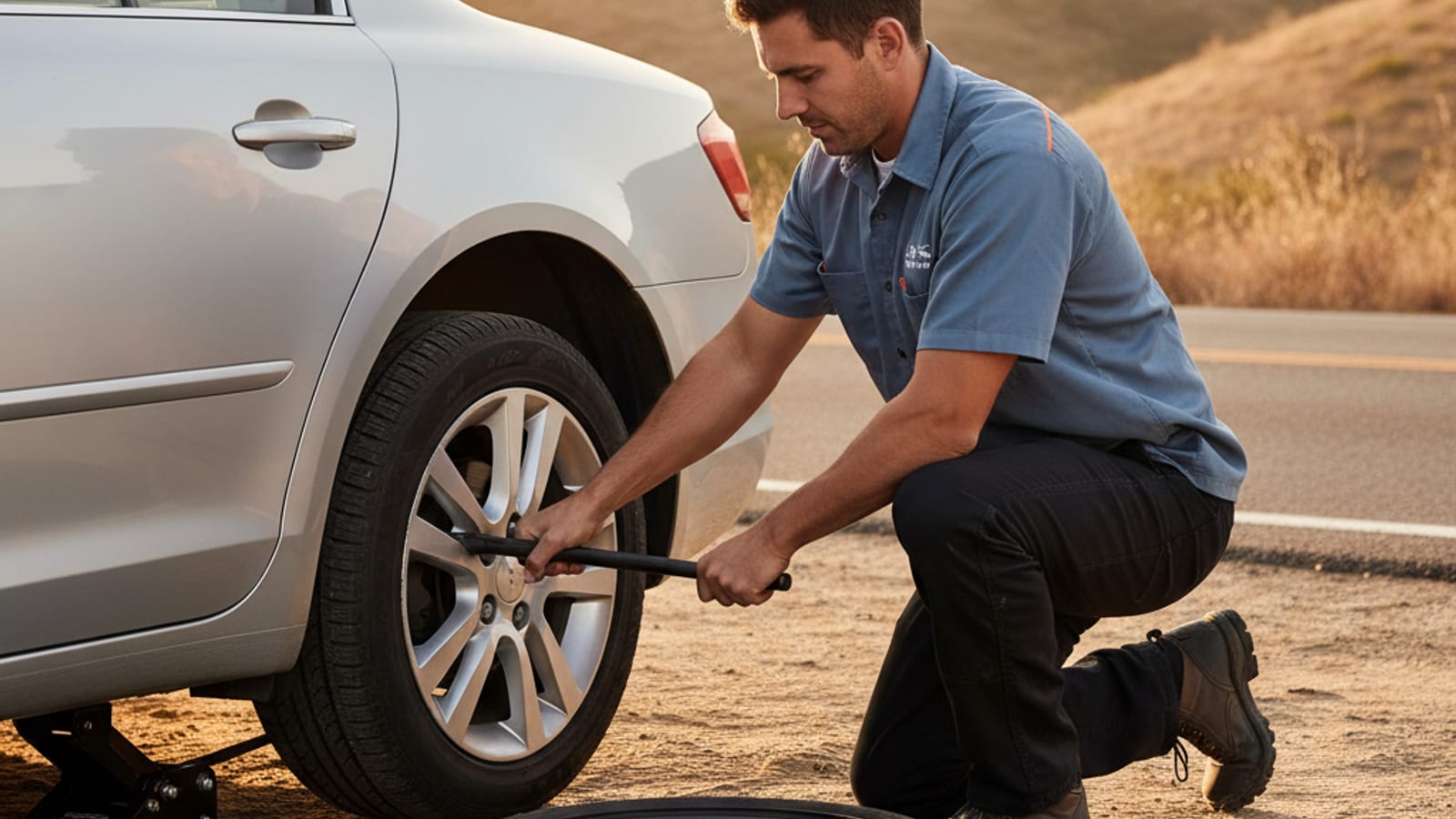
Change a flat tire on the side of the road
The difference between a 20-minute shoulder stop and an hour on the phone with a tow company is knowing where the spare and jack live before you need them.
What to do if you slide on ice or hit a flooded viaduct
Chicago winters glaze bridges and ramps before flat streets, and a heavy rain fills a viaduct underpass faster than it looks. First step: stop making it worse.